A service description can be updated every month and still belong on a page. A post can remain useful for years. The distinction is not whether content changes or expires; it is how WordPress organizes and presents it. Choose the content type according to the route readers should use to find it.
Posts fit a stream of publishing. They normally participate in date-based lists and can use categories and tags. A repair journal, a series of lessons or company news can benefit from that arrangement. Readers can browse a topic or move through newer and older entries without every article appearing in the main menu.
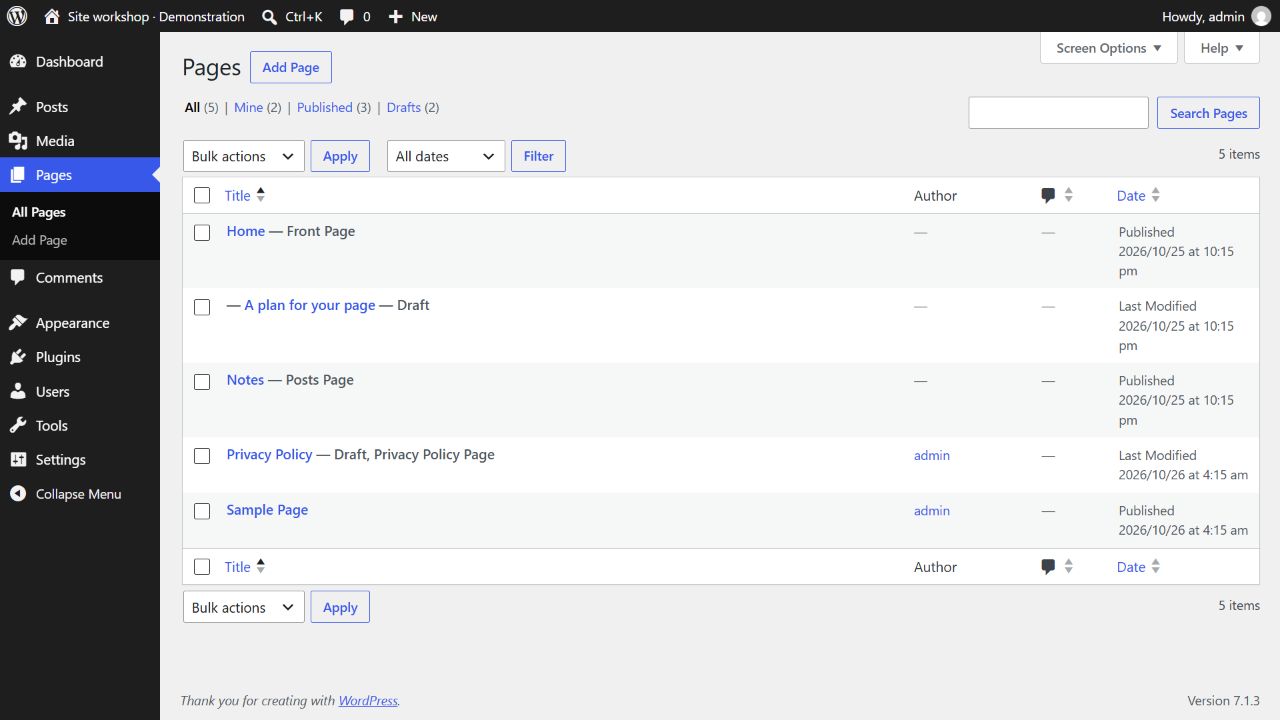
Pages fit information that stands outside that stream, such as a service overview, contact instructions or a description of a project. They can have parent and child relationships. Ordinary pages do not use post categories and tags by default. Their place in a hierarchy does not automatically decide every navigation menu.
Think about the next ten pieces of content
Suppose a photographer publishes a page explaining portrait sessions. Individual lighting tips belong naturally in a collection of posts, while the session page remains the stable place for booking information. Turning every tip into a top-level page would make the content harder to browse as the collection grows. Turning the main service description into a dated announcement could bury information that visitors always need.
The theme determines much of the visible presentation. It may show dates on posts, hide them, or give pages a particular layout. Removing a visible date does not turn a post into a page. Similarly, a page can use a dynamic template without ceasing to be a page. Separate the underlying content organization from the visual design.
Before publishing, check where the item will appear: a category archive, the posts page, a parent-page structure or a manually maintained menu. If the answer feels awkward, reconsider the content type while the item is still a draft. Changing an established item later can affect its address and links, so it is worth settling the basic structure before sharing it widely.