A request such as “we need a booking plugin” leaves almost every important decision open. Does a visitor reserve an appointment immediately, or send a request for someone to approve? Can two people book the same slot? Does payment happen on the website? Those differences determine the software you need, even when all the candidates advertise a calendar.
Describe one ordinary transaction from beginning to end. For a small repair service, that might be a visitor choosing a service, supplying a postcode and requesting a morning appointment. The business receives the request, checks its route and confirms a time by email. A complicated real-time scheduling system could add work without solving an actual problem.
Put the necessary inputs, result and person responsible on one page. Add the conditions that would make the feature unusable: a form that cannot be completed by keyboard, an export that omits appointment dates, or a notification available only through an account nobody monitors. These become questions for documentation and a trial installation.
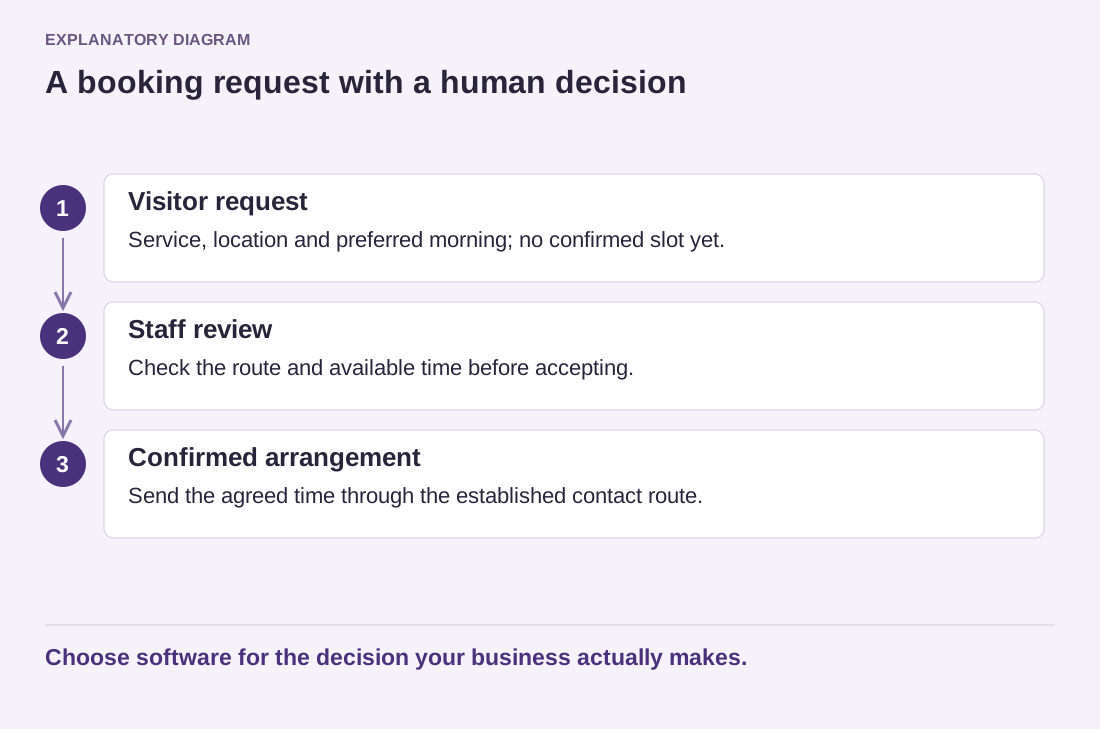
Read the diagram as text
- Visitor request: Service, location and preferred morning; no confirmed slot yet.
- Staff review: Check the route and available time before accepting.
- Confirmed arrangement: Send the agreed time through the established contact route.
Choose software for the decision your business actually makes.
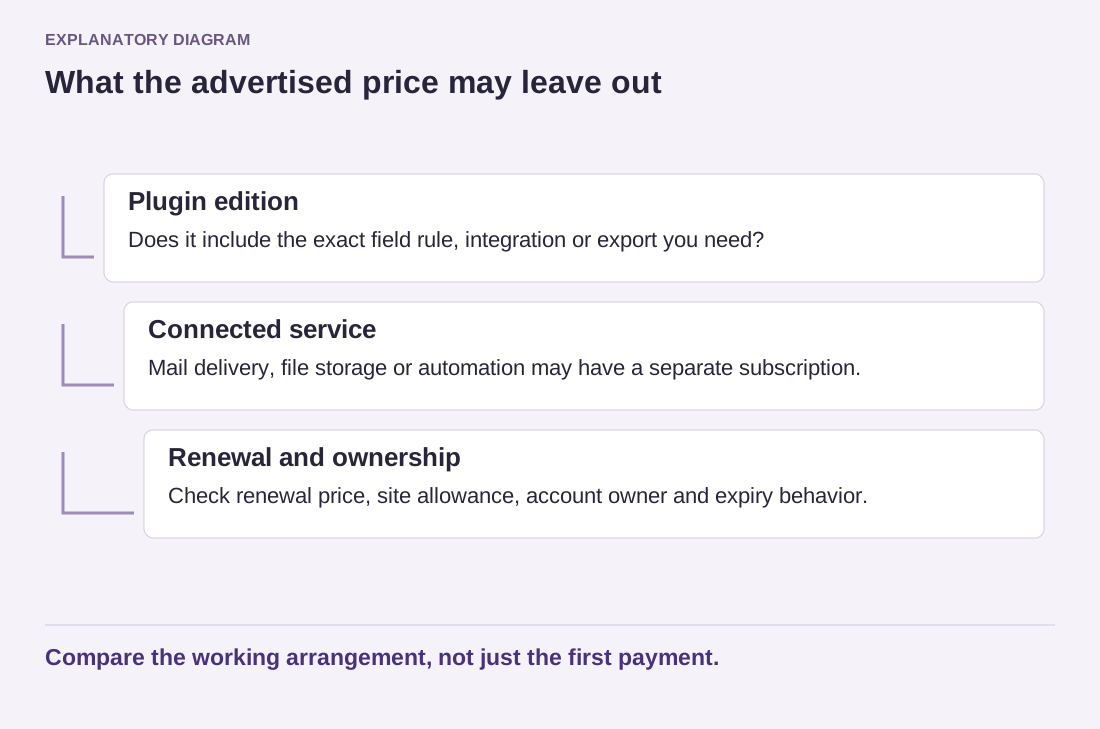
Keep a second list for conveniences. Color choices and dashboard widgets may be pleasant, but they should not outweigh a missing cancellation workflow. If the free edition cannot perform an essential step, compare the full cost of the required edition rather than the headline starting price. Include any separate service subscription.
Consider who will maintain the feature after launch. Someone must review failed submissions, update the extension and understand what happens if an external connection expires. A plugin that fits the visitor's task but exceeds the owner's available time is not a complete fit.
Finally, write an exit condition. For the repair service, that could mean exporting future appointments with customer contact details and a readable status. Try that export with invented sample records before putting real bookings into the system. The exercise turns an open-ended shopping trip into a decision about a specific workflow, with a visible way to leave if the needs change.