A color change can belong to one notice, every notice of that type or the whole website. Those are different scopes. Before touching a style control, decide which group of elements should change together. This prevents a local exception from accidentally becoming a site-wide redesign, or a repeated rule from being maintained separately on dozens of pages.
In a block theme, global styles can define broad choices such as typography and colors. Styles for a particular block type can provide a shared baseline. Individual blocks can also carry local settings. The exact options depend on the theme and software version, and local overrides can explain why one block does not follow a later global change.
When reviewing an exception, ask whether it communicates something meaningful. A different color for a genuine warning may help; a different paragraph size left over from a pasted document usually does not. Remove accidental variation before designing new rules around it. Otherwise, the style system can become a record of editing history rather than a coherent presentation. A short review of existing overrides often reduces the amount of work needed for a later global change.
Imagine that all ordinary buttons should use the same background and text color. A shared button style is easier to maintain than editing each button individually. Now imagine a special warning panel that needs a different treatment. A local style may be appropriate there, provided it remains readable and its exceptional purpose is clear.
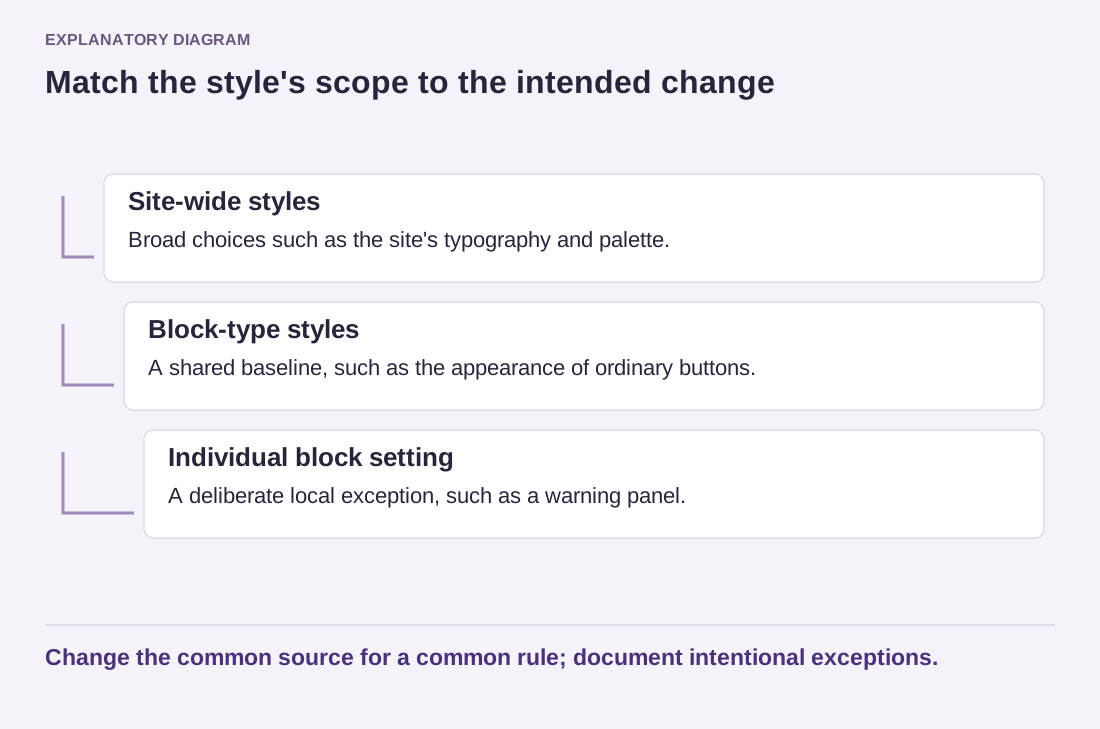
Read the diagram as text
- Site-wide styles: Broad choices such as the site's typography and palette.
- Block-type styles: A shared baseline, such as the appearance of ordinary buttons.
- Individual block setting: A deliberate local exception, such as a warning panel.
Change the common source for a common rule; document intentional exceptions.
Look for existing overrides before adding another
Select a block that looks different and inspect its current settings. It may already have a custom color, size or spacing value. Adding more overrides can obscure the original cause. Where the editor supports resetting a local value, consider whether returning to the shared style is the cleaner choice.
Use representative content when changing a global rule. A larger heading size might improve a short homepage title while breaking a long article heading. A new link color may work on white and fail on a colored panel. Review several page types and backgrounds rather than judging the entire change from the current preview.
Save deliberate exceptions in the project notes. They do not need a complicated design system, just enough explanation that another editor knows why a block differs. When a repeated exception appears across many pages, it may deserve a shared pattern or style instead. Good scope choices make future changes predictable: one adjustment should affect the elements you intended, with fewer surprises hidden in local formatting.