Comments create an ongoing responsibility, not merely an extra area beneath an article. Before enabling them across a new site, decide whether conversation serves the publication and who will review incoming messages. A small service site may be better served by a direct contact route, while a discussion-focused journal may have a clear reason to invite replies.
The discussion settings provide defaults for comment behavior. Individual posts can also have their own comment settings. A change to a general default does not necessarily close comments on everything already published. Check existing items separately when changing the site's policy, especially if sample content or imported posts arrived with comments enabled.
Write down what readers can expect. Will comments be reviewed before appearing? Which subjects belong in the discussion? Where should someone send an account problem or private information? A brief explanation near the comment area can prevent visitors from treating a public reply box as a confidential support channel.
Plan the work behind the invitation
Consider who receives notifications and how often someone will review the queue. An invitation to comment that leads to weeks of unexplained silence can be frustrating. Do not promise immediate replies if no one is assigned to provide them. The size of the site does not remove the need for a realistic moderation routine.
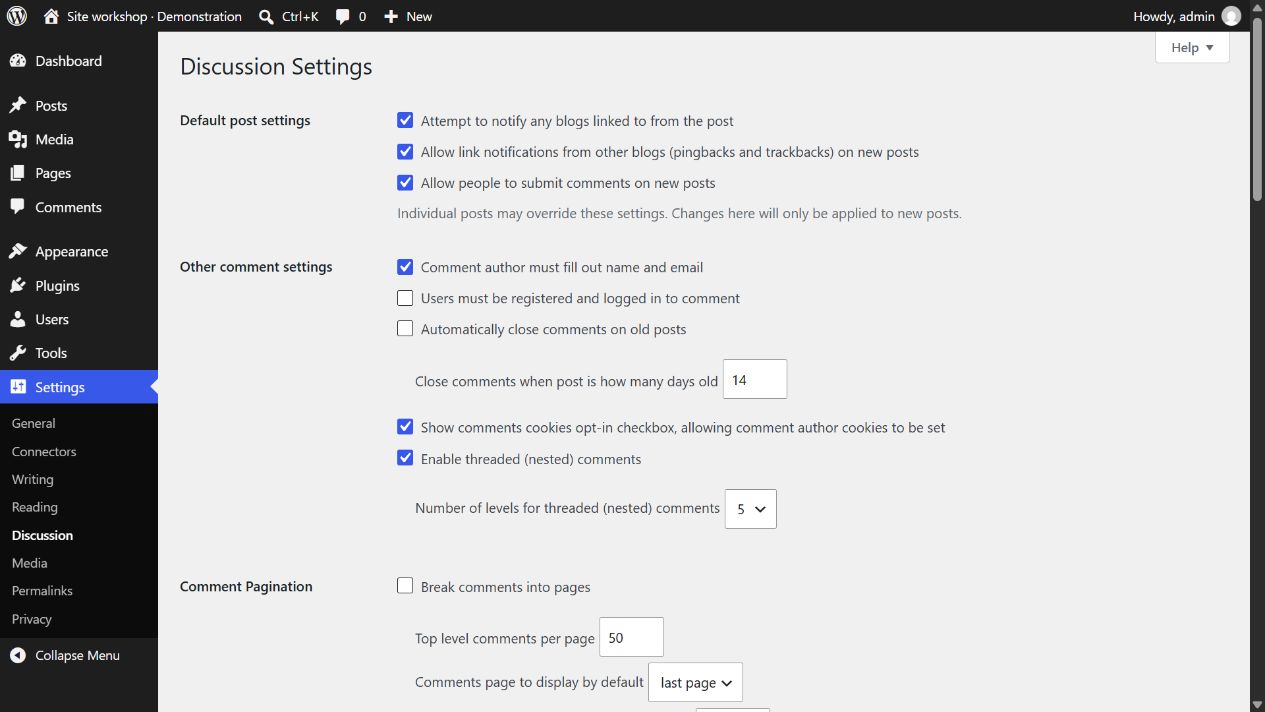
Inspect the public form and its actual fields. Themes and plugins can alter the information collected or displayed. Any privacy explanation should match that behavior, including third-party services if used. Avoid copying another site's policy without checking whether your form works the same way. Turning on a feature is also a decision about handling the information it receives.
You can keep comments open only where discussion is useful. A tutorial might welcome clarifying questions while a contact page does not need a public thread. Review the decision as the publication grows. The useful measure is whether comments add understandable, maintained conversation—not whether every page offers the same set of controls because that was the default.