Two reports can describe the same page and still disagree without either being broken. A lab test loads the page under selected conditions. Field data summarizes experiences from eligible real visits. The first is a controlled experiment; the second reflects a mixture of devices, connections, locations and behavior.
That difference matters when you have just changed a site. A fresh lab run can test the new version immediately. A field report may cover a rolling period that still includes visits to the older version. Expecting both displays to move together on the same afternoon can make a useful change look ineffective.
Read the label on the result
Check whether the field information applies to the exact URL or to the wider origin. Some pages do not have enough eligible data for their own report. A site-wide result is useful context, but it does not prove that one particular article has the same experience. Likewise, an absence of field data is not a passing result or evidence that nobody visits the page.
A lab profile is also a choice, not a description of every reader. A simulated mobile run may expose a problem that your powerful laptop hides. It cannot reproduce every visitor's background apps, connection changes or actions after the first screen. Keep the profile consistent when comparing your own changes, and use actual devices to understand the visible effects.
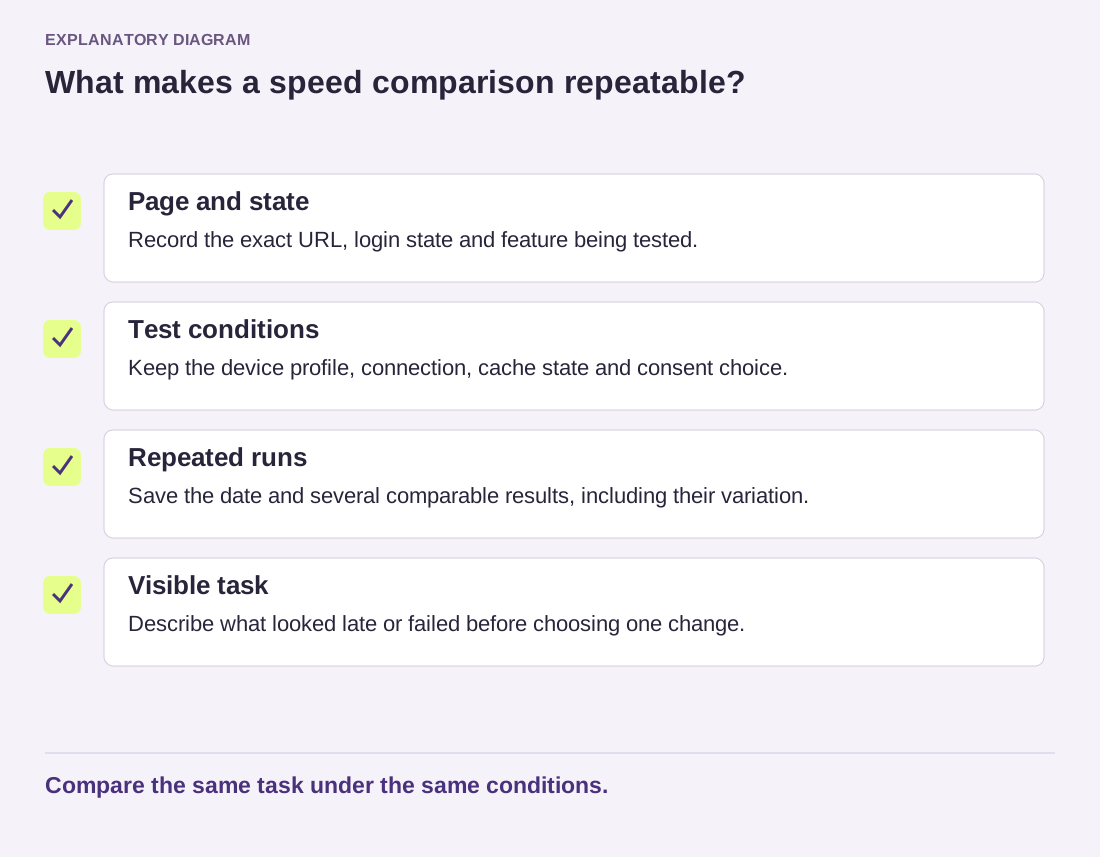
Suppose a page performs well in an initial-load test but becomes sluggish after a reader opens several filters. That interaction may not occur in the default lab run. The right next step is to reproduce the action sequence, not simply rerun the same page-load test until its score changes. Write down what the reader does and when the delay appears.
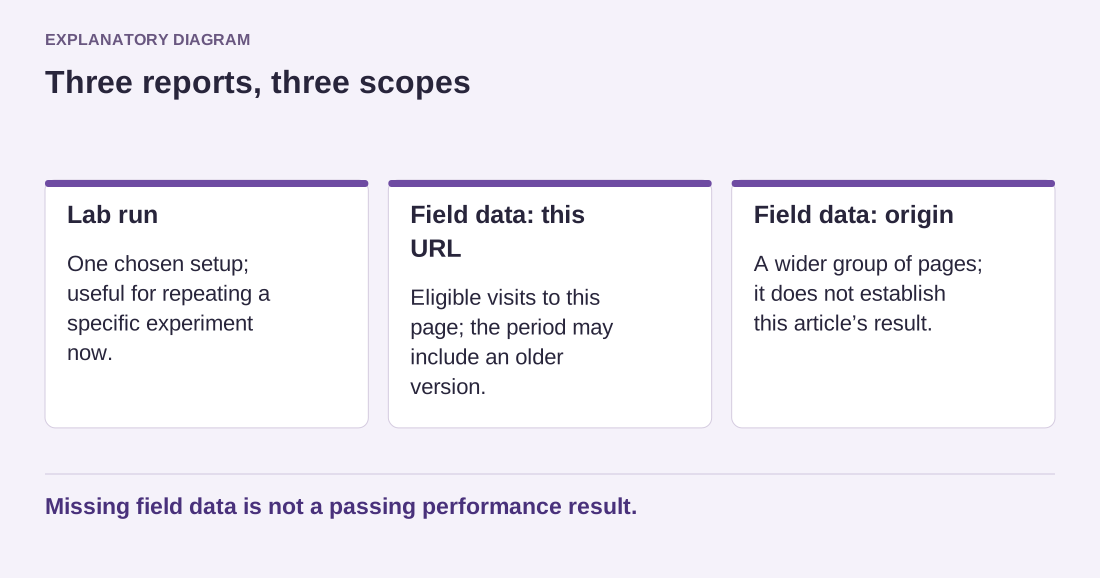
Read the diagram as text
- Lab run: One chosen setup; useful for repeating a specific experiment now.
- Field data: this URL: Eligible visits to this page; the period may include an older version.
- Field data: origin: A wider group of pages; it does not establish this article’s result.
Missing field data is not a passing performance result.
Use disagreement to form a question
When field results are worse, ask which real-world conditions the lab omitted. When a lab result is worse, ask whether the chosen profile is more constrained than the visits represented in the field sample. Neither comparison is a reason to discard inconvenient evidence.
Keep the two sources side by side with their date ranges and scope. Use repeatable lab experiments to investigate a change, then allow the relevant field period to reflect the new version. Judge the result alongside useful tasks such as reading, opening navigation and submitting a form. The reports become more informative when you stop asking them to be interchangeable.